

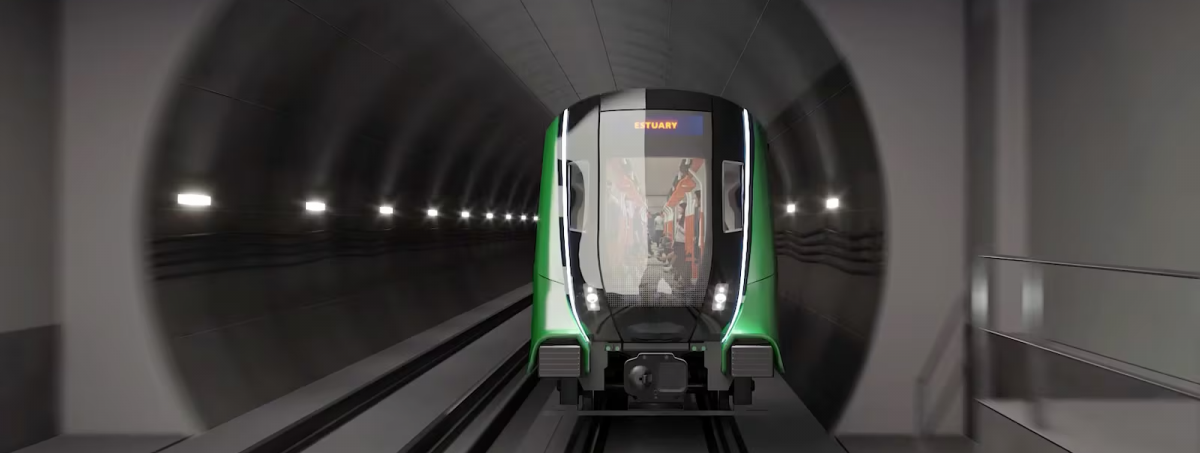
MetroLink's revised business case, expected before Cabinet next week, includes up to €500 million to build accommodation for as many as 2,000 construction workers, a commitment that matters to building and architecture professionals because it introduces workforce housing as a standalone budget line on major Irish infrastructure projects for the first time at this scale. Consideration was disclosed at up to €500 million for worker accommodation, within a total project cost now put at €14.5-17.5 billion, up from an earlier €9.5 billion midpoint estimate.
Transport Infrastructure Ireland is the state agency delivering MetroLink, a 19km largely underground rail line first lodged for planning in September 2022.
The Land Development Agency is in talks with transport authorities about building housing for 1,500 to 2,000 people, expected to revert to the State once the line is complete.
An Oireachtas committee heard last year that roughly 8,000 workers would be needed, with international companies likely bringing personnel from abroad to supplement local labour.
Jacobs and Aecom hold a 12-year, up to €550 million programme delivery partner contract, ensuring the project is delivered within budget, time frame and quality standards.
The structural driver is construction cost inflation and design changes adding an estimated €2 billion to MetroLink's price tag, with the new workforce housing line reflecting an international pattern of major infrastructure projects needing to import and house labour directly.
For the sector, the timing matters because TII has already advertised tunnelling and excavation works worth up to €7.9 billion and supply, operate and maintain works worth up to €7.3 billion, meaning contractors bidding for MetroLink's largest packages will price labour housing into schemes at a scale with few Irish precedents.
The already-awarded €550 million Jacobs and Aecom contract shows TII locking in delivery oversight before main construction tenders are finalised, giving engineering consultancies visibility into a 12-year revenue stream ahead of contractors bidding for the physical works.
The broader implication for the sector is that Ireland's infrastructure pipeline is maturing to the point where workforce logistics, not just design and construction, are becoming a formal line item in major project business cases, shaping how future megaprojects are costed.
Source: The Irish Times








.png)