

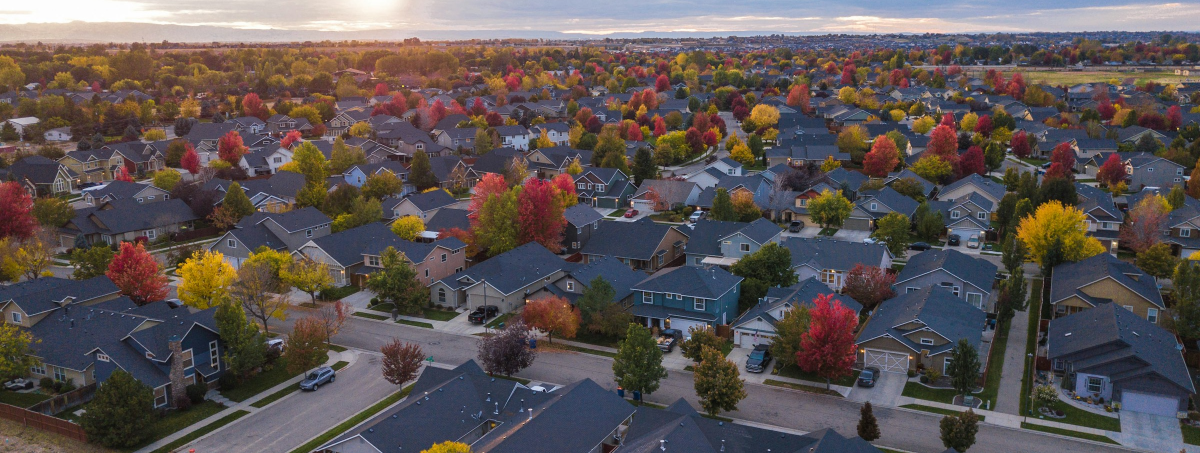
House prices in Donegal are sustaining their upward trajectory. The REA Average House Price Survey for Q2 2026, published in June 2026, shows second-hand three-bedroom semis rose 3.5% in the three months to June, reaching sale agreed in five weeks. The Daft.ie Q2 2026 Sales Report places Donegal's average four-bedroom detached house at EUR 391,000. The CSO Residential Property Price Index confirms the Border region recorded 9.5% annual growth in the 12 months to February 2026, the second highest of any Irish region. Donegal is one of the country's most active residential demand zones.
The price growth is driven by supply constraint, not speculation. REA agent Paul McElhinney of REA McElhinney, Milford, notes Q2 remained competitive due to demand against limited supply. With a median price of EUR 252,500, the county attracts first-time buyers, cross-border buyers from Northern Ireland, and those seeking better value than Leinster. Three structural forces define the opportunity: cross-border demand, a BER premium, and acute undersupply of new homes.
Cross-border demand from Northern Ireland is a durable feature of the Donegal market. REA agent Roger McCarrick of REA McCarrick and Sons confirmed that Northern Ireland continues to have a strong influence alongside first-time buyers. With average Northern Ireland house prices at GBP 225,269 per the Q1 2026 Nationwide survey, Donegal offers comparable value from two overlapping buyer pools. Improving cross-border infrastructure and a shared residential catchment deepened since the pandemic mean this dynamic will persist.
Energy efficiency has become a direct commercial differentiator. The Q1 2026 REA survey found A-rated BER properties in Donegal commanded a 22% price premium over C-rated equivalents. The CSO confirms Donegal had the lowest county median price at EUR 198,000 in February 2026, creating a gap energy-efficient new-builds can bridge profitably. For architects and developers, the case is compelling: strong demand, affordable land, a BER incentive, and a planning environment the Tánaiste has committed to reforming for rural self-build.
Three boardroom priorities follow. First, assess Donegal as part of a regional pipeline strategy, building relationships with local contractors and planning authorities before the market tightens further. Second, develop standardised energy-efficient house designs that capture the 22% BER premium and replicate across multiple sites. Third, monitor the MyHome Q2 2026 data for any acceleration in the landlord exit trend, which could create renovation-led workstreams alongside new-build activity.
Donegal's house prices are still 65% above pre-Covid levels per Daft.ie, and the supply gap will not close without more construction. The combination of price growth, cross-border demand, and a BER premium makes Donegal one of the most strategically attractive residential markets on the island. Firms that build regional presence now will lead delivery when that supply gap begins to close.
(The views expressed by the writer are his/her own and do not necessarily reflect the views or positions of BusinessRiver.)






.png)